
Is Philadelphia Still a Good Market for Investment Properties with Today’s Mortgage Rates?
Let’s get straight to it: you’re looking at Philadelphia investment properties in 2026, and mortgage rates are probably making you pause. With rates hovering between 6.5% and 7.2% for investment properties, you’re wondering if the numbers still work. The short answer? Yes—but you need to be smarter about where and how you invest.
The Philadelphia Market Reality Check
Here’s what the data tells us about Philadelphia right now. The median home price in Philadelphia sits around $285,000 as of early 2026—still significantly below the national median of $412,000. That affordability gap is your advantage. While mortgage rates have climbed from the historic lows of 2020-2021, Philadelphia’s fundamentals haven’t changed: strong rental demand, growing neighborhoods, and property prices that allow you to actually cash flow.
According to recent market analysis, Philadelphia rental rates have increased approximately 4.8% year-over-year, with average rents for a two-bedroom unit reaching $1,850 in desirable neighborhoods. Meanwhile, vacancy rates remain low at around 6.2%, indicating sustained demand. These aren’t abstract numbers—they’re the foundation of your investment strategy.
Where the Math Still Works
Jennifer Agadzhanov from Fusion PHL Realty has been guiding investors through this exact question, and the pattern is clear: location-specific strategy matters more than ever. You can’t just buy anywhere and expect returns. Let’s break down where Philadelphia still delivers:
Kensington and Fishtown
Kensington continues its transformation, offering multi-family properties in the $320,000-$450,000 range. With strategic renovations, you’re looking at rental income of $2,400-$3,200 per month for a well-positioned duplex. Yes, your mortgage payment is higher than it would have been three years ago, but the rental rates have climbed too. Cap rates in select Kensington blocks are still hitting 7-8% for savvy investors who know the micro-markets.
Fishtown proper commands premium rents—$2,200+ for two-bedroom units—but purchase prices reflect that demand. Your play here is finding properties on the Kensington side of the border where values haven’t fully caught up.
Point Breeze and Grays Ferry
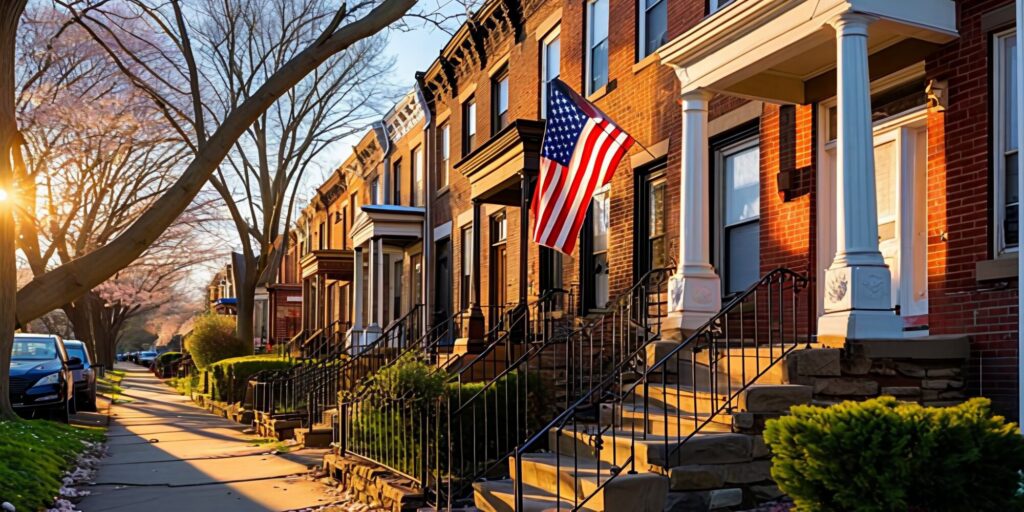
Point Breeze remains one of Philadelphia’s strongest investment zones. Brick rowhomes in the $220,000-$310,000 range can generate $1,600-$2,000 monthly rent. Even with current mortgage rates, you’re achieving positive cash flow with 20-25% down. The neighborhood’s proximity to Center City and ongoing development make it a solid long-term hold.
The key is focusing on blocks with recent renovations and stable tenant bases. Jennifer Agadzhanov emphasizes that in Point Breeze, block-by-block analysis is essential—two streets can have dramatically different investment profiles.
West Philadelphia
West Philly offers diverse opportunities, from student rentals near Drexel and Penn to family-oriented areas in Parkside and Wynnefield. Multi-family properties here range from $280,000-$420,000, with rental income potential of $2,800-$4,200 for well-maintained triplexes.
The university presence provides consistent rental demand, and neighborhoods like Cedar Park are seeing increasing interest from young professionals. Your cash-on-cash returns here typically land in the 6-9% range, depending on your renovation budget and property management approach.
Germantown and Mt. Airy
These neighborhoods offer a different value proposition: larger properties, often stone colonials or twins, at prices that still make sense. Properties in the $240,000-$380,000 range can house multiple units or provide strong single-family rental income of $2,000-$2,800 monthly.
The challenge with current mortgage rates is that your margins are tighter on higher-priced properties, but Germantown’s ongoing revitalization and Mt. Airy’s established appeal provide solid fundamentals for patient investors.
Running the Numbers: What You Need to Know
Let’s look at a realistic scenario. You find a duplex in Kensington for $380,000. With 25% down ($95,000) and a 7% interest rate on your investment property loan, your monthly mortgage payment is approximately $1,895. Add in property taxes ($420/month), insurance ($180/month), and maintenance reserves ($200/month), and you’re at $2,695 in monthly expenses.
If you’re collecting $2,900 in total rent ($1,450 per unit), you’re cash flowing $205 monthly—not a windfall, but positive from day one. More importantly, your tenants are paying down your principal, you’re capturing appreciation in a growing neighborhood, and you’re building long-term wealth through real estate.
The investors who win at PHL Property Collective understand this isn’t about getting rich on monthly cash flow alone. It’s about the combination of cash flow, appreciation, loan paydown, and tax benefits. When you factor in depreciation and interest deductions, your actual return on investment often exceeds 12-15% annually.
Strategies That Work Right Now
With mortgage rates at current levels, here’s what successful Philadelphia investors are doing:
- House hacking: Buy a multi-family, live in one unit, rent the others. You’ll qualify for owner-occupied financing (lower rates) while building your portfolio.
- Value-add plays: Target properties needing cosmetic updates. Forced appreciation through smart renovations helps offset higher borrowing costs.
- Long-term holds: Don’t flip in this market unless you have a specific exit strategy. Buy for rental income and let time work in your favor.
- Multiple units: Duplexes and triplexes spread your risk and maximize rental income per property.
- Creative financing: Explore seller financing, assuming existing mortgages, or partnering with other investors to reduce your capital requirements.
What About Waiting for Rates to Drop?
Here’s the truth no one wants to hear: waiting costs you money. While you’re sitting on the sidelines hoping for 4% rates to return, you’re missing out on appreciation, rental income, and loan amortization. Philadelphia property values have increased an average of 3.9% annually over the past five years, and that trend shows no signs of reversing in desirable neighborhoods.
As Jennifer Agadzhanov often reminds clients at Fusion PHL Realty, you can refinance when rates drop, but you can’t recapture lost appreciation. If you buy today at $300,000 and the property appreciates to $330,000 over two years, you’ve gained $30,000 in equity. If you wait and rates drop one point but the same property now costs $330,000, you’re paying more for the same asset.
The optimal strategy? Buy the right property at the right price today, and refinance when rates improve. You date the rate, but you marry the property.
The Investment-Grade Checklist
Before you pull the trigger on any Philadelphia investment property with current mortgage rates, verify:
- Cash flow positive from day one: Even with 7% rates, the numbers should work without relying on future appreciation.
- Strong rental comps: Research actual rents in the specific block, not just neighborhood averages.
- Neighborhood trajectory: Look for areas with improving fundamentals—new businesses, infrastructure investment, declining crime rates.
- Property condition: Factor in realistic repair and renovation costs. Deferred maintenance destroys returns.
- Exit strategy: Know your three-to-five-year plan. Are you holding for cash flow, building equity, or positioning for a future 1031 exchange?
The Bottom Line
Is Philadelphia still a good market for investment properties with today’s mortgage rates? Absolutely—if you’re buying the right properties in the right neighborhoods with realistic expectations. The days of easy money through rapid appreciation alone are behind us, but Philadelphia’s fundamentals remain strong: affordable property prices relative to national markets, robust rental demand, and diverse neighborhoods at different stages of growth.
The investors who succeed in this environment are those who run the numbers carefully, understand their target neighborhoods block by block, and view real estate investment as a long-term wealth-building strategy rather than a get-rich-quick scheme. Whether you’re looking at a brick rowhome in Point Breeze, a multi-family in Kensington, or a stone colonial in Germantown, the opportunities are there for investors who do their homework.
Your competition isn’t other investors—it’s your own hesitation. While mortgage rates are higher than recent years, they’re historically normal, and Philadelphia’s property prices still allow for profitable investment when you buy smart.
Disclaimer: This article is for informational purposes only and does not constitute financial, legal, or investment advice. Mortgage rates, property values, and market conditions vary and can change rapidly. Always conduct thorough due diligence, consult with qualified financial advisors, real estate attorneys, and tax professionals before making any investment decisions. Past performance does not guarantee future results. PHL Property Collective and Fusion PHL Realty comply with all Fair Housing Act requirements and serve clients without regard to race, color, religion, sex, national origin, familial status, or disability.
By Jennifer Agadzhanov