
How Much House Can You Afford in the Greater Philadelphia Area at Today’s Mortgage Rates?
If you’ve been watching the Philadelphia housing market from the sidelines, you’re probably wondering whether it’s finally your turn. With mortgage rates hovering around 6.2% for a 30-year fixed loan as of early March 2026, affordability looks different than it did a year ago — and dramatically different from what your parents dealt with. The question isn’t just “can you buy?” It’s “what can you actually get for your money across the Greater Philadelphia area?”
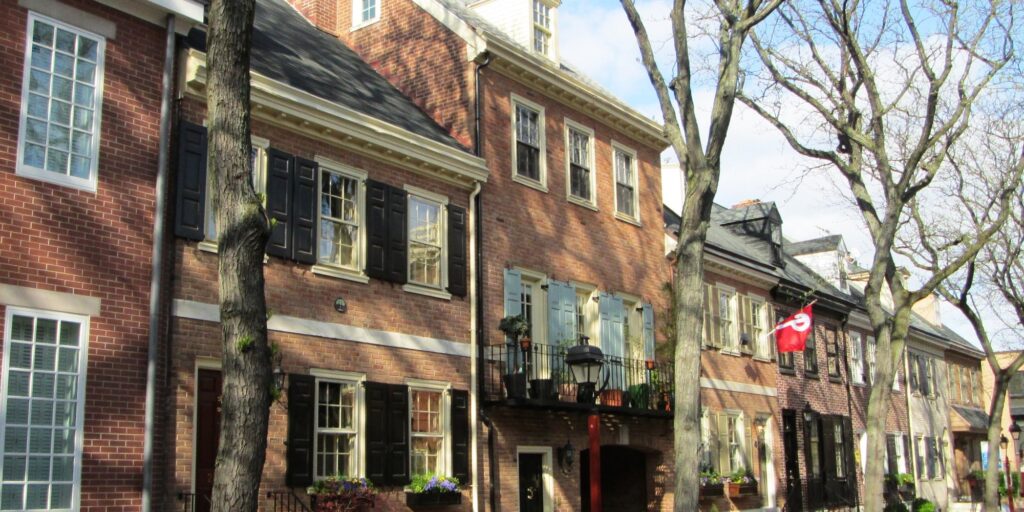
That answer changes depending on whether you’re looking at a rowhome in Fishtown, a colonial on the Main Line, or a split-level in Bucks County. Let’s break it down.
Where Mortgage Rates Stand Right Now
As of this writing, the average 30-year fixed mortgage rate sits at approximately 6.21%, according to Bankrate’s national survey. That’s up slightly from the previous week due to geopolitical uncertainty, but still hovering near three-year lows. For a 15-year fixed loan, you’re looking at rates in the high 5% range.
What does that mean in real dollars? On a $269,000 home — the current median sale price in the City of Philadelphia — with 10% down, your principal and interest payment lands around $1,480 per month. Put 20% down and that drops to roughly $1,315. Add in property taxes, insurance, and PMI (if applicable), and you’re looking at total monthly housing costs between $1,700 and $2,100 depending on the neighborhood.
These aren’t abstract numbers. They determine whether you’re signing a lease for another year or getting your keys.
The 28/36 Rule: Your Starting Point
Before you start scrolling listings, you need a clear picture of what lenders will actually approve. Most conventional lenders use the 28/36 rule as a guideline:
- 28% of your gross monthly income should be the maximum you spend on housing costs (mortgage payment, property taxes, insurance, HOA fees)
- 36% of your gross monthly income should be the ceiling for all debt payments combined (housing plus car loans, student loans, credit cards)
So if your household brings in $85,000 per year — a realistic income for many Philadelphia-area buyers — your target monthly housing payment maxes out around $1,983. That’s workable in several parts of the Greater Philadelphia market, but it’ll stretch thin in others.
As Mary Ellen Dearborn often tells her clients at PHL Property Collective: “The bank will tell you what you qualify for. I’ll help you figure out what you can actually afford — and those are two very different numbers.”
What Your Budget Gets You Across Greater Philadelphia
The beauty of buying in the Philadelphia region is the sheer range of options. Your dollar stretches or shrinks dramatically depending on your zip code. Here’s a realistic breakdown at today’s rates.
$200,000–$300,000: City Neighborhoods With Upside
At today’s rates with 10% down, this price range puts your monthly payment between $1,100 and $1,650 (principal, interest, taxes, and insurance). In the city itself — where the median sale price hit $269,000 in January 2026, a 12.1% increase year-over-year according to Redfin data — you’re right in the sweet spot.
Neighborhoods like South Philly, parts of Kensington, Port Richmond, and sections of West Philadelphia offer rowhomes and twins in this range. You’ll find renovated two-bedrooms, solid fixer-uppers, and the occasional gem that just needs cosmetic work.
If you’re open to looking beyond city limits, parts of Norristown and Lansdale in Montgomery County also deliver solid value in this bracket.
$300,000–$450,000: The Sweet Spot for Move-Up Buyers
This is where things get interesting. Monthly payments at 10% down range from roughly $1,650 to $2,480. You’ll need a household income in the $75,000–$110,000 range to stay comfortable.
In the city, this budget opens the door to neighborhoods like Fishtown, Manayunk, East Falls, and Roxborough — areas with walkable restaurants, strong community identity, and genuine resale upside. In the suburbs, you’re looking at entry-level single-family homes in Conshohocken, parts of Bucks County, and Cheltenham Township.
Chestnut Hill condos and smaller homes occasionally appear in this range too, giving you that Main Line-adjacent lifestyle at a fraction of the cost.
$450,000–$650,000: Suburban Comfort and City Upgrades
Here your monthly payment runs $2,480 to $3,575 with 10% down. You’re typically looking at a household income of $120,000 or more.
This is prime Main Line territory — specifically Ardmore, Havertown, and Narberth — where you can find three- and four-bedroom homes with actual yards. In Montgomery County towns like Conshohocken and Ambler, this range buys updated homes in walkable downtown districts. In Bucks County, you’re looking at spacious properties in Doylestown, Newtown, and surrounding townships.
In the city, this budget gets you renovated homes in Center City, Graduate Hospital, and Northern Liberties — prime urban living with short commutes.
Costs That Catch First-Time Buyers Off Guard
Your mortgage payment is just the headline number. Mary Ellen Dearborn and the team at Fusion PHL Realty consistently coach buyers to budget for the full picture:
- Philadelphia property taxes: The city’s real estate tax rate is approximately 1.3998%, which on a $300,000 home adds about $350/month
- Homeowner’s insurance: Budget $100–$200/month depending on the property type and location
- PMI (Private Mortgage Insurance): If your down payment is under 20%, expect an extra $75–$200/month
- Transfer taxes: Pennsylvania charges 1% and Philadelphia adds another 3.278% — that’s a significant closing cost in the city
- Maintenance reserves: Set aside 1% of your home’s value per year for repairs — roughly $225/month on a $270,000 home
The suburbs carry different cost profiles. Montgomery and Bucks Counties have their own tax rates and typically require flood insurance in certain areas. School district taxes add another layer, though they often buy you access to highly rated public schools — a genuine value driver.
Programs That Stretch Your Dollar Further
If you’re buying in Philadelphia, you may qualify for assistance programs that materially change your math:
- Philly First Home: The city’s program offers assistance with down payment and closing costs for first-time buyers purchasing within city limits
- PHFA (Pennsylvania Housing Finance Agency): Offers below-market mortgage rates and down payment assistance statewide — particularly useful for buyers looking in Bucks County, Montgomery County, or other suburban communities
- FHA Loans: Require as little as 3.5% down with more flexible credit requirements, though you’ll pay mortgage insurance for the life of the loan
- VA Loans: If you’re a veteran, zero down payment and no PMI remains one of the most powerful homebuying tools available
Navigating these programs is where working with a knowledgeable local agent makes a measurable difference. PHL Property Collective and Fusion PHL Realty both maintain relationships with lenders who specialize in these programs and can often streamline the process for qualified buyers.
The Market Context You Need to Know
Here’s where the Greater Philadelphia market stands heading into spring 2026:
- Philadelphia’s median home price reached $269,000 in January 2026 — up 12.1% compared to the same month last year, signaling sustained demand despite elevated rates
- Homes are spending an average of 67 days on the market, up from 60 days a year ago — giving buyers slightly more breathing room than the frenzy of 2021–2022
- Sale-to-list price ratio sits at 96.8%, meaning most homes close at roughly 3% below asking — there’s real room to negotiate, especially in the city
These numbers tell a clear story: prices are rising, but the pace is manageable. You’re not competing against 15 cash offers on every property anymore. If you’ve got your financing sorted, you have leverage.
How to Figure Out Your Real Number
Here’s the practical approach Mary Ellen Dearborn recommends to every buyer she works with:
- Get pre-approved, not just pre-qualified. A pre-approval letter based on verified income and credit gives you (and sellers) confidence in your budget.
- Use 25% of your take-home pay as your comfort ceiling. Forget what the bank says you qualify for — what can you pay every month without stress?
- Factor in your actual lifestyle. Do you eat out four nights a week? Have two car payments? Those expenses don’t show up on a mortgage application but they define your comfort level.
- Run the numbers at a rate 0.5% higher than today’s. If you can afford the payment at 6.7%, you’ll sleep well at 6.2%.
- Talk to a local agent before you talk to Zillow. Online estimates miss neighborhood-level pricing, tax variations, and upcoming development that can affect your investment.
The Bottom Line
At today’s mortgage rates, the Greater Philadelphia area remains one of the most accessible major metro markets on the East Coast. Whether your budget points toward a $250,000 rowhome in South Philly or a $500,000 colonial in Doylestown, there’s a path forward — if you go in with clear numbers and the right guidance.
The team at PHL Property Collective and Fusion PHL Realty works with buyers at every price point across Philadelphia, Montgomery County, Bucks County, and the Main Line. If you want a straightforward conversation about what you can actually afford — not a sales pitch — reach out. That’s what we’re here for.
Disclaimer: This article is for informational purposes only and does not constitute financial, legal, or real estate advice. Mortgage rates, home prices, and market conditions change frequently; all figures cited are approximate and based on data available at the time of publication. Consult a licensed mortgage lender for personalized rate quotes and a qualified real estate professional for guidance specific to your situation. All real estate transactions are subject to applicable federal, state, and local laws, including the Fair Housing Act, the Real Estate Settlement Procedures Act (RESPA), and the NAR Code of Ethics. PHL Property Collective, Fusion PHL Realty, and Mary Ellen Dearborn do not provide mortgage lending services. All home financing is subject to credit approval, income verification, and underwriting guidelines.
By Mary Ellen Dearborn