
How Does Your Down Payment Affect Mortgage Rates When Buying in the Greater Philadelphia Area?
If you’re planning to buy a home in the Greater Philadelphia area, you’ve probably heard that your down payment matters. But did you know it can directly impact the mortgage rates you’re offered? Understanding this connection can save you thousands of dollars over the life of your loan—and help you make smarter decisions when shopping for properties in neighborhoods like Center City, the Main Line, or Bucks County.
As a real estate professional with Fusion PHL Realty and PHL Property Collective, I’ve worked with countless buyers navigating the mortgage process. One of the most common questions I hear is: “How much should I put down?” The answer isn’t just about what you can afford upfront—it’s also about how that decision affects your long-term costs, including your mortgage rates.
The Direct Connection Between Down Payment and Mortgage Rates
Lenders view your down payment as a measure of risk. When you put more money down, you’re borrowing less relative to the home’s value, which means you have more “skin in the game.” This lower loan-to-value ratio (LTV) makes you a less risky borrower in the eyes of lenders, and they reward you with better mortgage rates.
Here’s why: If you default on your loan, the lender needs to recoup their investment by selling the property. A larger down payment means there’s a bigger equity cushion, reducing the lender’s potential loss. In practical terms, a buyer putting 20% down on a home in Montgomery County will typically qualify for a lower interest rate than someone putting just 3% down on a similar property.
Understanding Loan-to-Value Ratio (LTV)
Your LTV ratio is calculated by dividing your loan amount by the property’s appraised value. For example, if you’re buying a $400,000 home in Delaware County and putting down $80,000 (20%), your loan amount is $320,000, giving you an LTV of 80%.
Most lenders offer their best mortgage rates to borrowers with an LTV of 80% or lower. Once your LTV crosses above 80%, you’ll typically see rates increase, and you may also be required to pay private mortgage insurance (PMI), which further increases your monthly costs.
How Much Does Your Down Payment Actually Impact Your Rate?
The rate difference between a minimal down payment and a substantial one can be significant. As of March 2026, buyers in the Philadelphia region might see rate differences of 0.25% to 0.75% or more, depending on their down payment amount and overall financial profile.
Let’s look at a real-world example: On a $350,000 home in Bucks County, the difference between a 3.5% FHA loan and a conventional loan with 20% down could mean a rate difference of half a percentage point or more. Over a 30-year mortgage, that could translate to tens of thousands of dollars in additional interest payments.
Breaking Down the Numbers
Here’s a simplified comparison of how different down payment amounts might affect your mortgage rates and monthly payments on a $400,000 home in the Greater Philadelphia area:
- 3.5% down ($14,000): Higher rate, PMI required, higher monthly payment
- 10% down ($40,000): Moderate rate, PMI required, moderate monthly payment
- 20% down ($80,000): Best rate, no PMI, lowest monthly payment overall
The sweet spot for many buyers is that 20% threshold, where you avoid PMI and qualify for the most competitive mortgage rates available.
PMI: The Hidden Cost of Smaller Down Payments
Private mortgage insurance deserves special attention because it’s often overlooked by first-time buyers. When you put down less than 20% on a conventional loan, lenders typically require PMI to protect themselves against the increased risk.
PMI can cost anywhere from 0.5% to 1% of your loan amount annually, depending on your credit score and down payment size. On a $350,000 loan, that’s an extra $145 to $290 per month—money that doesn’t build equity or reduce your principal balance.
In neighborhoods like Center City, where property values are higher, PMI costs can be even more substantial. The good news? PMI isn’t permanent. Once your equity reaches 20% through a combination of payments and appreciation, you can typically request to have PMI removed from conventional loans.
Conventional Loans vs. FHA Loans: Down Payment Differences
The type of loan you choose also interacts with your down payment to affect your mortgage rates and overall costs.
Conventional Loans
Conventional loans typically require a minimum of 3% down, but as we’ve discussed, putting down 20% gives you access to the best rates and eliminates PMI. These loans are ideal for buyers with strong credit scores and stable income—common among professionals looking at properties on the Main Line or in upscale Philadelphia suburbs.
FHA Loans
FHA loans require just 3.5% down and are more forgiving of lower credit scores, making them popular with first-time buyers in the Greater Philadelphia area. However, they come with both an upfront mortgage insurance premium and ongoing monthly insurance that can’t be removed without refinancing (for loans with less than 10% down).
While FHA loans offer accessibility, they often come with slightly higher effective mortgage rates when you factor in the insurance costs. Mary Ellen Dearborn often advises buyers to compare both options carefully, especially if they’re on the borderline of qualifying for conventional financing.
Special Considerations for the Greater Philadelphia Market
The Philadelphia area’s diverse housing market presents unique opportunities and challenges when it comes to down payments and mortgage rates.
Urban vs. Suburban Considerations
Properties in Center City or University City often come with higher price tags, meaning a 20% down payment represents a more substantial cash outlay. However, these neighborhoods also tend to appreciate well, making the investment in a larger down payment worthwhile for many buyers.
In contrast, areas like parts of Bucks County or Delaware County may offer more affordable entry points, where reaching that 20% threshold is more achievable for buyers who’ve been saving diligently.
Local Assistance Programs
The Greater Philadelphia area offers several down payment assistance programs that can help buyers reach that crucial 20% mark or at least move closer to it. The Pennsylvania Housing Finance Agency (PHFA) and local programs through Montgomery County and Delaware County can provide grants or low-interest loans to qualified buyers.
These programs can be game-changers, potentially helping you secure better mortgage rates by increasing your down payment without draining your savings completely.
Strategic Approaches to Down Payments
So what’s the right down payment strategy for you? It depends on your financial situation, goals, and the current market conditions in the Greater Philadelphia area.
The Case for 20% Down
If you can comfortably afford it, 20% down remains the gold standard. You’ll get the best mortgage rates, avoid PMI, and start with substantial equity in your home. This approach makes particular sense if you’re buying in appreciating neighborhoods like parts of the Main Line or Center City, where property values have historically risen steadily.
When a Smaller Down Payment Makes Sense
There are legitimate reasons to put down less than 20%, even if you could afford more:
- Preserving cash reserves: Keeping money for renovations, emergencies, or other investments
- Market timing: Getting into the market sooner during periods of rising home prices
- Investment diversification: Not tying up all your liquid assets in real estate
As someone who’s guided many buyers through this decision at PHL Property Collective, I’ve seen successful homeowners take both approaches. The key is understanding the true cost—including the impact on your mortgage rates—and making an informed choice.
The Middle Ground: 10-15% Down
Putting down 10-15% can be a smart compromise. You’ll likely get better mortgage rates than minimum down payment options, though not quite as favorable as 20% down. You’ll still pay PMI, but it will be lower than with a minimal down payment, and you’ll build equity faster than someone who puts down just 3-5%.
Other Factors That Affect Your Mortgage Rates
While your down payment is crucial, it’s not the only factor lenders consider when setting your mortgage rates.
Credit Score
Your credit score has a major impact on the rates you’re offered. In the current market, buyers with scores above 740 typically qualify for the best mortgage rates, while those below 620 may face significantly higher rates or difficulty qualifying at all—even with a substantial down payment.
Debt-to-Income Ratio
Lenders want to see that your monthly debt payments (including your future mortgage) won’t exceed about 43% of your gross income. A lower debt-to-income ratio can help you qualify for better rates, especially when combined with a healthy down payment.
Property Type and Location
The type of property you’re buying and its location within the Greater Philadelphia area can also affect your rates. Single-family homes in established neighborhoods typically qualify for better mortgage rates than condos or properties in transitional areas.
Preparing Your Down Payment: Practical Tips
If you’re working toward buying a home in the Philadelphia region, here are some strategies to help you save for a down payment that will get you favorable mortgage rates:
- Set a specific target: Know what you need for 20% down in your target neighborhood, whether that’s Bucks County, Montgomery County, or elsewhere
- Automate your savings: Set up automatic transfers to a dedicated down payment account
- Explore assistance programs: Research local and state programs that might help boost your down payment
- Consider gift funds: Many loan programs allow you to use gifted money from family members toward your down payment
- Time your purchase strategically: Working with an experienced agent can help you identify the right moment to buy
The Bottom Line: Making Your Down Payment Work for You
Your down payment is one of the most powerful tools you have to secure favorable mortgage rates and set yourself up for long-term financial success as a homeowner in the Greater Philadelphia area. While 20% down remains the ideal target for most buyers, the right answer depends on your unique situation, the neighborhood you’re targeting, and your overall financial goals.
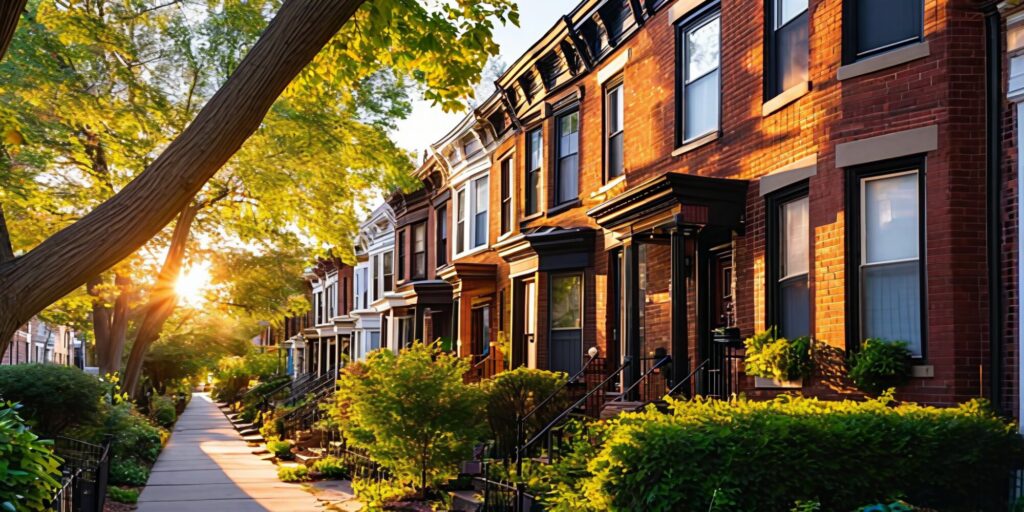
Whether you’re eyeing a charming rowhome in Center City, a spacious colonial in Montgomery County, or a growing community in Delaware County, understanding how your down payment affects your mortgage rates will help you make smarter decisions and potentially save thousands of dollars over the life of your loan.
The mortgage landscape can be complex, with different loan programs, rate structures, and qualification requirements to navigate. That’s where working with knowledgeable professionals makes all the difference.
Ready to Explore Your Home Buying Options?
At PHL Property Collective and Fusion PHL Realty, we help buyers throughout the Greater Philadelphia area understand not just the homes they’re considering, but the financial strategies that will serve them best. From understanding how your down payment impacts your mortgage rates to finding the perfect property in the right neighborhood, our team—including Mary Ellen Dearborn—is here to guide you every step of the way.
Ready to start your home buying journey? Contact us today to discuss your options and discover how we can help you find your dream home at the best possible rate.