
How Much Does It Cost to Buy a Home on the Main Line vs. Center City Philadelphia?
The Real Cost of Buying a Home: Main Line vs. Center City Philadelphia
When you’re considering buying a home in the Greater Philadelphia area, the choice between the Main Line suburbs and Center City Philadelphia isn’t just about lifestyle—it’s about money. The upfront purchase price is only the beginning of what you’ll actually spend.
I’m John Kuester III, and through my work with PHL Property Collective and Fusion PHL Realty, I’ve helped dozens of buyers navigate this exact decision. The truth? There’s no one-size-fits-all answer. What matters is understanding the full financial picture so you can make the right choice for your situation.
The Purchase Price Reality
Let’s start with what you’ll pay to get in the door. In Center City Philadelphia, the median home price hovers around $425,000 to $475,000 as of early 2026. That typically gets you a condo or rowhome—think 1,200 to 1,800 square feet, maybe two or three bedrooms, and almost always shared walls.
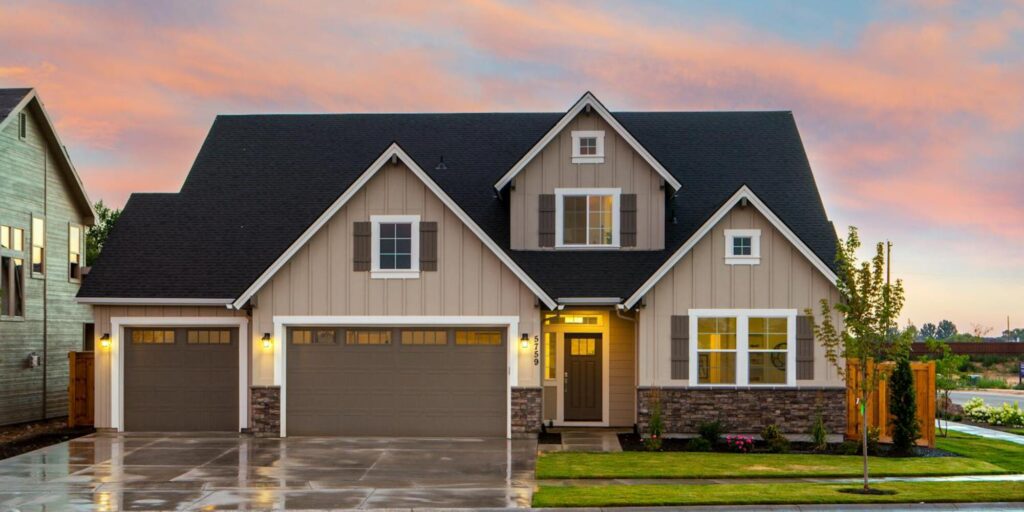
On the Main Line—towns like Ardmore, Bryn Mawr, Wayne, Radnor, and Haverford—median prices run higher, typically $650,000 to $850,000. But you’re getting something different: single-family homes with yards, driveways, and significantly more square footage. In desirable Main Line neighborhoods, it’s not uncommon to see homes well into the $1 million-plus range.
The sticker shock is real, but before you write off the Main Line entirely, you need to look at what happens after you buy.
Property Taxes: The Hidden Monthly Bill
This is where things get interesting. Philadelphia’s property tax rate sits at around 1.3998% of assessed value. If you buy a $450,000 condo in Center City, you’re looking at roughly $6,300 per year in property taxes—about $525 per month.
Main Line townships have their own tax structures, and they vary. Lower Merion Township (which includes Ardmore, Bala Cynwyd, and parts of Wynnewood) has a combined rate around 2.4% when you factor in school district, township, and county taxes. Radnor Township runs about 2.2%. So that $750,000 Main Line home? You could be paying $16,500 to $18,000 annually—closer to $1,400 to $1,500 per month.
Yes, that’s more. But when buyers work with me at PHL Property Collective, I always remind them: you’re also getting highly-rated school districts, lower crime rates, and towns with robust municipal services. It’s not just a tax bill—it’s what you’re buying with that money.
The Philadelphia Wage Tax Factor
Here’s something many first-time buyers overlook: if you live in Philadelphia, you pay the city’s wage tax. As of 2026, that’s 3.8398% for residents and 3.4481% for non-residents who work in the city.
Let’s say you earn $100,000 per year and work in Center City. If you live in Center City, you’ll pay roughly $3,840 annually in wage tax. If you live on the Main Line and commute in, you’ll pay about $3,448. That’s a difference of around $400 per year—not huge, but it adds up.
But here’s the bigger picture: if you work remotely or your job is outside Philadelphia, and you live on the Main Line, you pay zero wage tax. That could save you nearly $4,000 per year compared to living in the city. Over a decade, that’s $40,000.
Lifestyle and What You’re Actually Buying
Center City offers walkability that the Main Line can’t match. You’re steps from restaurants, theaters, parks, and public transit. The Market-Frankford Line and Broad Street Line put the entire city within reach. If you don’t want a car—or want to use it only occasionally—Center City makes that possible.
The Main Line gives you space. You get a yard for your kids or dog, a driveway, a garage. You’re still close to Philadelphia—most Main Line towns are 15 to 30 minutes from Center City via SEPTA’s Regional Rail. But you’re living in quieter, tree-lined neighborhoods with top-tier public schools like those in Lower Merion and Radnor.
Both have their appeal. The question is what you value more right now—and five or ten years from now.
The Condo vs. Single-Family Cost Structure
In Center City, most buyers are looking at condos or rowhomes. That means HOA fees—typically $200 to $600 per month, sometimes more. Those fees cover building maintenance, common areas, insurance, and amenities like gyms or doormen. But they also mean less control. Want to renovate? You’ll need board approval.
On the Main Line, you’re usually buying a single-family home with no HOA. That sounds great—until your roof needs replacing, your furnace dies, or your driveway cracks. Suddenly you’re writing a $15,000 check. You have full control, but also full responsibility.
I always tell buyers working with Fusion PHL Realty: budget for maintenance. A good rule of thumb is 1% to 2% of your home’s value per year. On a $750,000 Main Line house, that’s $7,500 to $15,000 annually. It won’t all come at once, but when it does, you need to be ready.
Commute Costs and Transportation
If you live in Center City and work downtown, your commute might be a 15-minute walk. Your transportation costs? Minimal.
If you live on the Main Line and commute to Center City, you have options. SEPTA Regional Rail runs frequently from towns like Wayne, Bryn Mawr, and Ardmore. A monthly pass costs around $200. If you drive, you’re paying for gas, parking (often $200 to $300+ per month in Center City), tolls, and vehicle wear.
Over a year, Main Line commuters can easily spend $4,000 to $6,000 more on transportation than Center City residents. That’s real money.
Hidden Costs You Need to Know About
Center City:
- HOA fees (ongoing, and they can increase)
- Limited or expensive parking if your building doesn’t include a spot
- Higher car insurance rates in urban zip codes
- Move-in/move-out fees (some buildings charge $500+ per move)
Main Line:
- Lawn care and landscaping ($1,500 to $3,000+ per year)
- Snow removal (if you don’t want to shovel yourself)
- Higher heating costs (larger homes = bigger utility bills)
- Pest control and ongoing home maintenance
These aren’t deal-breakers, but they’re part of the total cost of ownership. When John Kuester III walks buyers through their options, these hidden costs often tip the scale one way or the other.
What About Resale Value?
Both Center City and the Main Line have strong real estate markets, but they move differently. Center City condos and rowhomes appeal to young professionals, empty nesters, and anyone prioritizing urban living. The Main Line attracts families focused on school districts and space.
Main Line homes tend to appreciate steadily, especially in top districts like Lower Merion and Radnor. Center City can see more volatility—faster gains during hot markets, but also sharper corrections when the market cools.
Your resale potential depends on what’s happening in the market when you sell, but both areas have historically been solid long-term investments.
So Which One Costs More?
Here’s the honest answer: it depends on how you live.
If you buy a $450,000 condo in Center City with $400/month HOA fees, $525/month in property taxes, and minimal transportation costs, your monthly housing cost (beyond mortgage) is around $925.
If you buy a $750,000 single-family home on the Main Line with $1,400/month in property taxes, $250/month in lawn care and maintenance, and $300/month in commuting costs, your monthly cost is around $1,950.
That’s about $1,000 more per month, or $12,000 per year. But you’re also getting a larger home, a yard, and access to some of the best public schools in Pennsylvania. For many buyers, that trade-off makes perfect sense.
How PHL Property Collective and Fusion PHL Realty Can Help
The decision between the Main Line and Center City isn’t just financial—it’s personal. What works for one buyer might be completely wrong for another.
That’s why I spend time with every client understanding not just their budget, but their life. Are you planning to have kids? Do you work from home? Do you hate commuting? Do you need top-tier public schools, or are private schools part of your plan?
Through PHL Property Collective and Fusion PHL Realty, I help buyers see the full financial picture—not just the purchase price, but the monthly costs, the lifestyle trade-offs, and the long-term value. I’ve lived and worked in Philadelphia for years, and I know these neighborhoods inside and out.
If you’re trying to decide between the Main Line and Center City, let’s talk. I’ll help you run the numbers, tour the right properties, and make a decision you’ll feel confident about for years to come.
Final Thoughts
Buying a home in Philadelphia—whether in Center City or on the Main Line—is one of the biggest financial decisions you’ll make. The purchase price is just the starting point. You need to factor in property taxes, wage taxes, HOA fees, maintenance, commuting costs, and lifestyle expenses.
The good news? Both options can be great investments. The key is choosing the one that fits your life, your finances, and your future.
Disclaimer: This article is for informational purposes only and does not constitute financial, legal, or investment advice. Real estate markets fluctuate, and individual circumstances vary. Buyers should conduct their own due diligence and consult with qualified professionals, including real estate agents, financial advisors, and attorneys, before making any purchase decisions. All price ranges and tax figures are approximate and subject to change. This content complies with Fair Housing Act requirements and does not discriminate based on race, color, religion, sex, handicap, familial status, or national origin.
By John Kuester III