
First-Time Homebuyer in Philadelphia? Here’s How Mortgage Rates Impact Your Budget

When you’re shopping for your first home in Philadelphia, mortgage rates are going to be one of the biggest factors in determining what you can actually afford. As Jennifer Agadzhanov from PHL Property Collective explains, even a fraction of a percentage point can mean the difference between buying that renovated rowhome in Fishtown or needing to expand your search to more affordable neighborhoods.
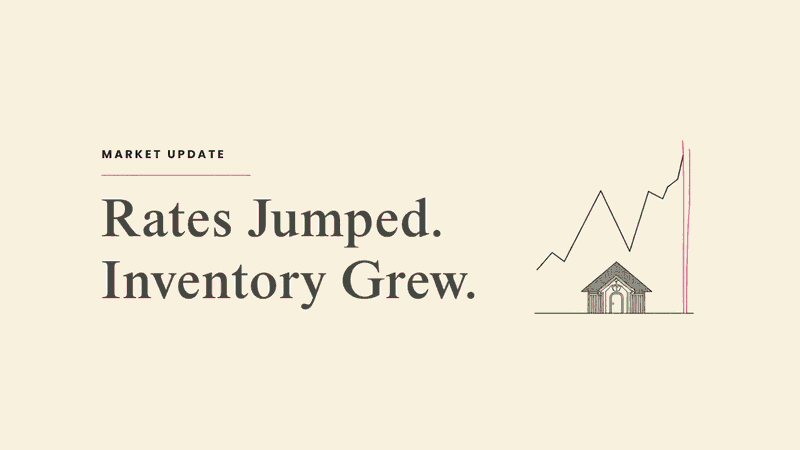
Here’s what you need to understand: mortgage rates don’t just affect your monthly payment—they reshape your entire housing budget, influence your down payment strategy, and determine how much house you can buy in the Greater Philadelphia area.
The Real Math Behind Mortgage Rates
Let’s cut through the confusion with actual numbers. Say you’re looking at a $350,000 home in Manayunk. With current mortgage rates hovering around 6.8% in early 2026, your monthly principal and interest payment would be approximately $2,280. Drop that rate to 6.0%, and you’re looking at $2,098 per month. That’s $182 less every single month, or $2,184 annually.
Jennifer Agadzhanov works with first-time buyers throughout Philadelphia every week, and she consistently sees buyers underestimate how rates affect their purchasing power. “Most people focus on the list price,” she notes, “but your interest rate determines your actual buying capacity more than anything else.”
Consider this scenario: At 6.8%, a buyer qualified for a $2,500 monthly payment could afford roughly a $382,000 home. At 6.0%, that same monthly payment stretches to cover a $419,000 home. That’s $37,000 in additional purchasing power—potentially the difference between a two-bedroom condo in Northern Liberties and a three-bedroom home with a yard.
How Rates Affect Your Down Payment Strategy
Your mortgage rate also influences how much you should put down. In Philadelphia’s competitive market, where median home prices reached approximately $265,000 in late 2025, many first-time buyers struggle with the down payment.
If rates are high, you might consider putting down less initially (say, 5% instead of 10%) and keeping more cash in reserve for renovations or closing costs. That rowhome in South Philly might need a new roof or updated electrical, and Jennifer Agadzhanov typically advises Fusion PHL Realty clients to maintain an emergency fund of at least $10,000 after closing.
Conversely, if you lock in a lower rate, putting more down can eliminate private mortgage insurance (PMI) and reduce your monthly payment even further. On a $300,000 home in Chestnut Hill, putting 20% down versus 5% could save you roughly $200 monthly by avoiding PMI.
The Opportunity Cost Factor
Here’s what many first-time buyers miss: the money you spend on interest is money you’re not building equity with. At higher mortgage rates, a larger portion of your monthly payment goes toward interest rather than principal in those early years.
Take a 30-year mortgage at 6.8% on that $350,000 Manayunk home. In your first year, you’d pay approximately $23,300 in interest but only $4,100 toward principal. That’s an 85/15 split. At 6.0%, you’d pay about $20,700 in interest and $4,500 toward principal—still heavily weighted toward interest, but you’re building equity faster.
Jennifer Agadzhanov encourages buyers working with PHL Property Collective to think long-term. “Your first home doesn’t have to be your forever home,” she explains. “But understanding how quickly you build equity affects your ability to move up in five or seven years.”
Rates and Closing Costs
Don’t forget that mortgage rates also affect your closing costs. Lenders charge points—fees you can pay upfront to lower your rate. In the Greater Philadelphia area, closing costs typically run 2-5% of the purchase price, and points can add another 1-2% if you buy down your rate.
On a $300,000 home in University City, you might pay $6,000 to $15,000 in closing costs. If you buy one point (1% of the loan amount) to reduce your rate from 6.8% to 6.5%, that’s an additional $3,000 upfront. Jennifer Agadzhanov helps Fusion PHL Realty clients run the break-even analysis: How long until that lower monthly payment recoups the upfront cost?
In this example, the monthly savings might be around $55, meaning you’d break even after about 55 months (roughly 4.5 years). If you plan to stay longer than that, buying points makes sense. If you might relocate for work or upgrade sooner, it doesn’t.
Property Taxes and Total Housing Costs
Philadelphia has some specific quirks that affect your total housing budget. The city’s property tax rate sits at about 1.3998% of assessed value as of 2026, while suburban Montgomery County and Bucks County rates vary widely by municipality—often ranging from 1.5% to 3%.
Your mortgage rate determines your principal and interest payment, but you also need to budget for property taxes, homeowners insurance (typically $1,200-$2,000 annually in the Philadelphia metro), and possibly HOA fees if you’re buying a condo in Center City or the Main Line.
When Agadzhanov pre-qualifies buyers, she makes sure they understand the full PITI (principal, interest, taxes, insurance) payment. “A $2,000 mortgage payment might actually be $2,600 when you add everything in,” she points out. “That affects what you can comfortably afford.”
Rate Impacts on Different Property Types
Mortgage rates can affect your choice between property types. A higher rate might push you toward a more affordable rowhome in Kensington rather than a single-family home in Conshohochen. It might mean considering a duplex where rental income offsets your payment.
Investment properties typically carry higher rates (often 0.5-1% more than owner-occupied loans), so if you’re considering a house hack—living in one unit and renting the other—work with someone like Jennifer Agadzhanov at PHL Property Collective who understands the local rental market and can help you run the numbers accurately.
What to Do Right Now
As a first-time buyer, your action plan should include:
- Get pre-approved now: Even if you’re not ready to buy for a few months, understanding what rates you qualify for helps you budget accurately. Rates can change weekly in 2026’s market.
- Check your credit score: A difference between a 680 and 740 credit score can mean 0.5% or more in rate differences. That’s substantial over 30 years.
- Compare multiple lenders: Jennifer Agadzhanov recommends getting quotes from at least three lenders. Rates and fees vary significantly, even in the same week.
- Consider timing: If rates are high now but expected to drop, you might buy with the intention to refinance later. Or you might wait if you have flexibility.
- Focus on the payment, not just the price: A $280,000 home at 6.0% might have the same monthly payment as a $260,000 home at 7.0%.
Making Your Budget Work in Philly
Philadelphia’s housing market offers incredible diversity. From affordable starter homes in neighborhoods like Tacony and Mayfair to luxury condos in Rittenhouse Square, there’s something at every price point. But your mortgage rate will determine which neighborhoods and property types are actually within reach.
Working with experienced agents at Fusion PHL Realty means having someone who understands these nuances. Jennifer Agadzhanov has helped dozens of first-time buyers navigate rate fluctuations, compare loan products, and ultimately find homes that fit both their dreams and their budgets.
The bottom line: Don’t just think about whether you can afford the down payment and closing costs. Think about whether you can comfortably afford the monthly payment for years to come, accounting for potential rate changes if you have an adjustable-rate mortgage, property tax increases, and maintenance costs.
In early 2026, with mortgage rates showing some volatility, the buyers who succeed are the ones who understand the full picture—not just the listing price, but the total cost of homeownership at today’s rates.
This article is for informational purposes only and does not constitute financial or legal advice. Mortgage rates, housing market conditions, and individual qualifications vary. Consult with qualified lenders and real estate professionals to understand your specific situation and options.
By Jennifer Agadzhanov